
Wood Turtles & Farms
The wood turtle is not yet rare in the Northeast, but populations are at high risk of injury and death from vehicles and farm equipment. In our ongoing field study of these beautiful creatures, we have collaborated with Jason Tesauro Consulting since 2018 to tag and radio-track wood turtle movements on agriculturally diverse farms.
Wood turtles live in and near low-gradient rivers and streams, where they overwinter and mate in the water but spend much of the warm season April to October foraging and nesting on land. During those months, the turtles are often in thickets of brambles, mugwort, multiflora rose, and stinging nettles where they can forage at comfortable temperatures and remain concealed from both predators and people, who may collect them illegally for the pet trade.
We are analyzing how hot weather, high streamflow, and seasonal activities stimulate wood turtles to enter farm fields with exposure to equipment hazards.

Adult wood turtle. Photo © Hudsonia
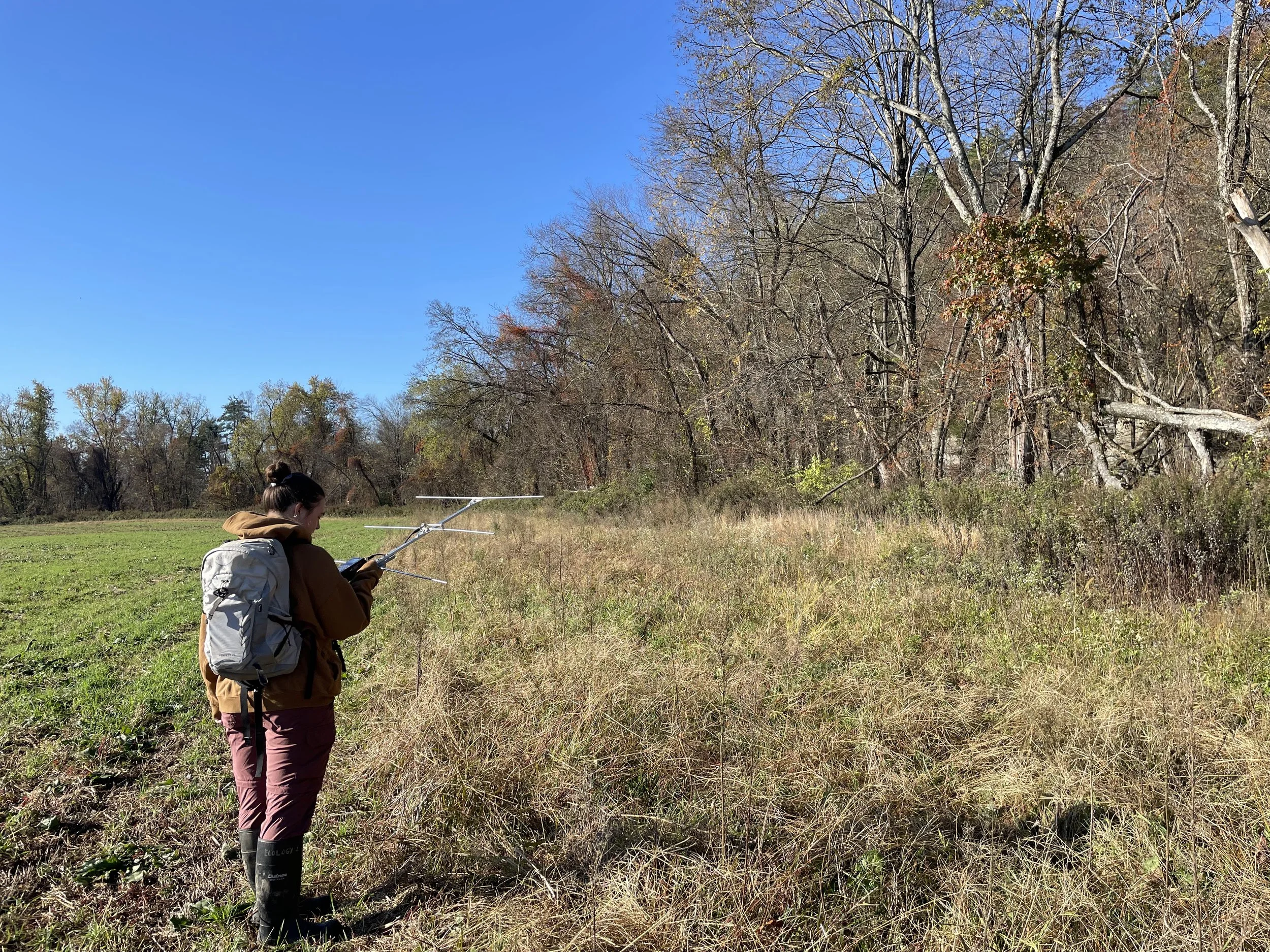
Hudsonia research assistant Meg Rumplick using radio telemetry to track wood turtles along the edge of a farm field. Photo © Hudsonia
Northeastern farms provide non-forested habitats for wood turtles, but also create risks. In addition to hazards posed by tractor tires and rotary mowers, the most dangerous implement is the roller-crimper, used to roll down and crimp the stalks of a cover crop to create a thick mulch layer in no-till farming systems. This provides agronomic benefits; however, where this practice overlaps with wood turtle movements, some turtles are killed when caught in its path. Because wood turtles are long-lived and slow to reproduce (sexually maturing around 15 years and living 50-80 years) populations are sensitive to the loss of even a small number of adults.
We are now learning to generalize our recommendations for farmers who do not have detailed data on their local wood turtles. For example, wider thickets between stream channel and cropfields may give turtles more habitat space and reduce their exposure to the hazards present on farms.
Hudsonia welcomes your support of our programs to survey, analyze, and recommend conservation and management of rare or declining wildlife and plants, in this instance to protect a threatened turtle species as we move to more sustainable farming practices.
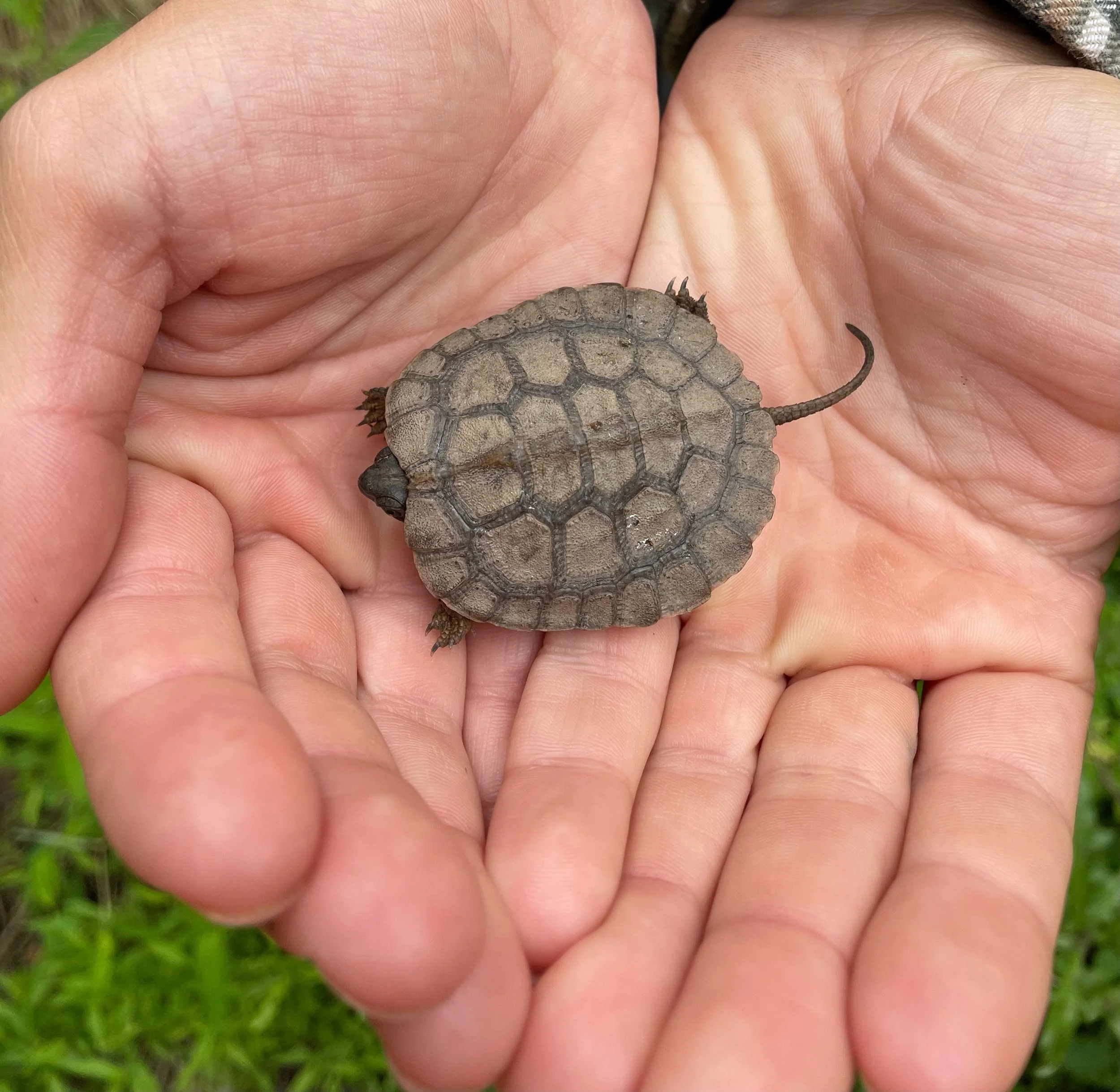
Young wood turtle. Photo © Abigail Klein
The wood turtle study is part of the Applied Farmscape Ecology Research Collaborative (AFERC) which is co-coordinated by the Hawthorne Valley Farmscape Ecology Program and the Hudson Valley Farm Hub. AFERC is funded by the Hudson Valley Farm Hub.
Read more about AFERC and Farm Hub here: https://hvfarmhub.org/applied-farmscape-ecology-research-collaborative/