
Darner dragonfly roosting on knotweed. Photo © Erik Kiviat
Knotweed is an invasive, non-native plant that has become common in many northern states and southern Canada, and is spreading southwards in the US.
Although it is commonly called “Japanese” knotweed, because it was first imported from Japan to Europe and the US, its native range also includes the Korean Peninsula and parts of China. It is composed of two parent species (itadori and giant knotweed) and their hybrids.
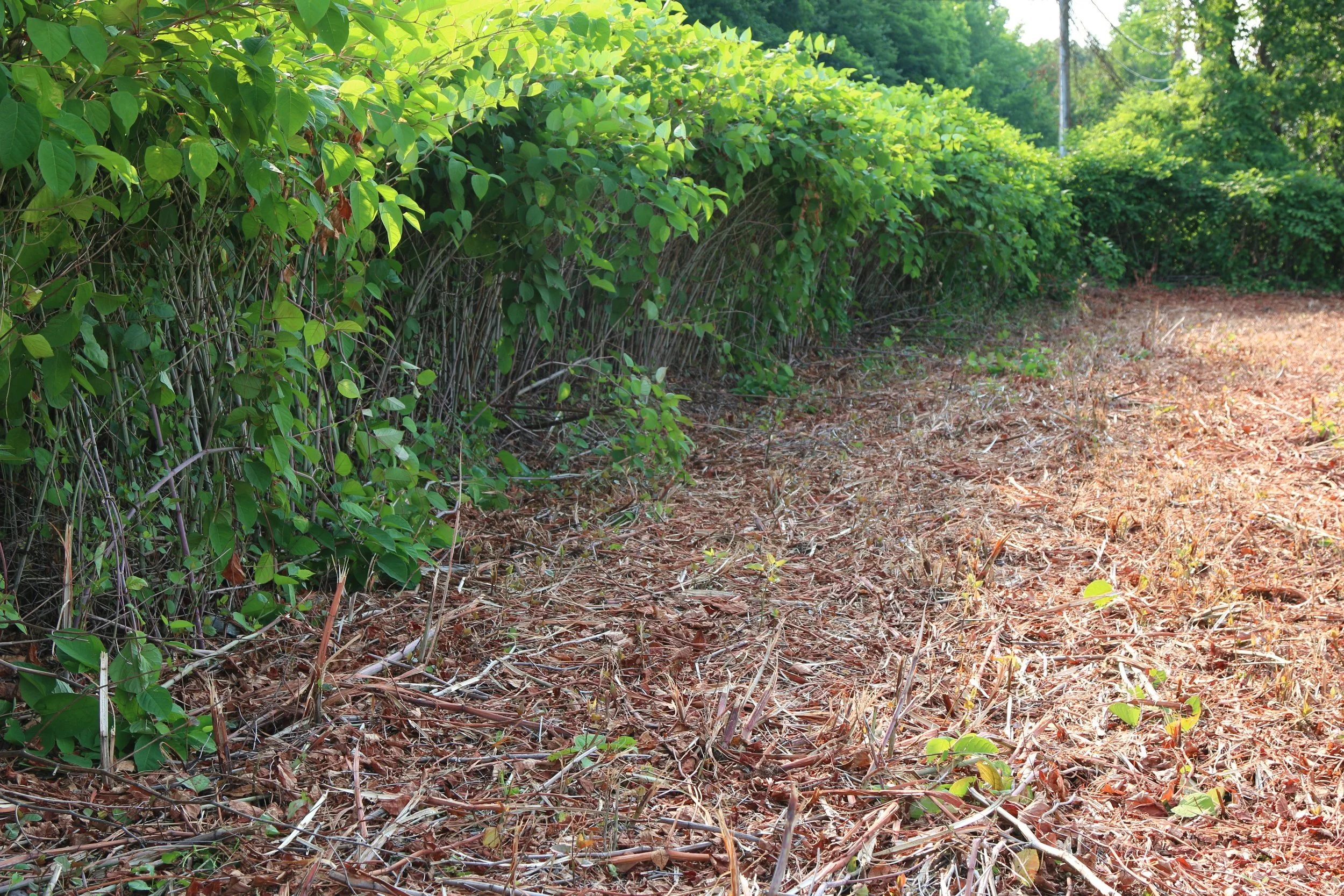
In New York and New Jersey, knotweed is frequent, especially along roads and streams, in patches ranging from one to thousands of square meters. The plant is commonly 2-3 meters tall with streams that can exceed 50 mm diameter at the base. Physically and chemically it is intermediate between a shrub and an herb.
Higher plants, mosses, and land snails generally do poorly beneath or among knotweed, and by its rooting pattern knotweed is believed to predispose stream banks to erosion.
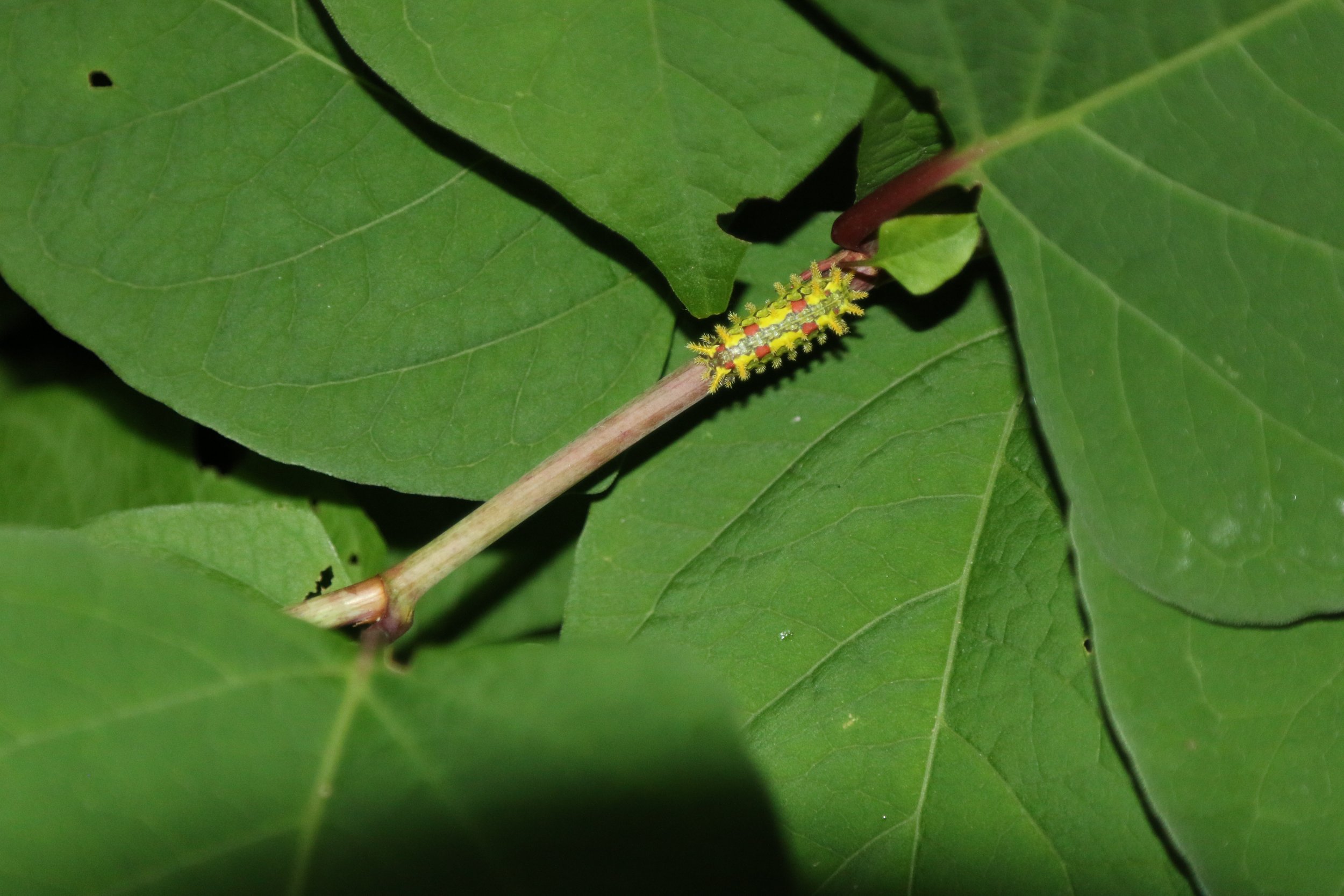
Sometimes considered a biological “desert,” knotweed provides habitat functions for a variety of organisms. Among these are 20 species of birds known to nest in knotweed, and hundreds of kinds of insects that harvest knotweed nectar and pollen, eat leaves, or hide in the fallen hollow stems. There is no information about the relative habitat values of knotweed compared to other plants (a challenging question).
Herbicides are often used to manage knotweed, but those chemicals are toxic to animals as well. Small patches of knotweed can be contained or controlled by frequent cutting, prescribed livestock grazing, covering with plastic tarps, and other techniques. Unfortunately, because of the rapid aboveground growth and often huge underground organs of storage and spread, management must continue for multiple years to be effective.
Hudsonia’s work is intended to guide local efforts to protect our landscapes, especially important when national environmental policies put the country’s natural resources under further strain. Effective nature management is site-specific, responsive to stakeholder goals, and based on current science.
In addition to providing useful information on vegetation management, we study the remarkable ecology of plants that thrive under human-caused stress, which may help us understand other species that are declining due to similar stresses.






Resources and Additional Reading:
Hartwig, T. & E. Kiviat. 2009. Experimental Management of Japanese Knotweed (Fallopia japonica) on the Batavia Kill, Greene County, New York. Report to Greene County Soil and Water Conservation District and New York City Department of Environmental Protection.
Natale, K. & E. Kiviat. 2025. Best Management Practices for priority invasive plants in the Lower Hudson Valley: A revised and expanded edition of the original 2016 report. Prepared for the Lower Hudson Partnership for Regional Invasive Species Management.
Kiviat, E., C.J. Whelan, & M.L. Haviland. 2025. Bird nesting habitat in knotweed (Polygonum cuspidatum s.l.) in North America and beyond. The Wilson Journal of Ornithology 1–16. https://doi.org/10.1080/15594491.2025.2494359
Palmieri, J., Kiviat, E. 2021. Toxic Effects of knotweed, Polygonum cuspidatum s.l. rhizome on the mosses Atrichum angustatum and Thuidium delicatulum. BioOne Complete.
Talmage, E. & E. Kiviat. 2004. Japanese knotweed and water quality on the Batavia Kill in Greene County, New York: Background information and literature review. Greene County Soil and Water Conservation District and New York City Department of Environmental Protection. 27 p.