Best Management Practices
for Invasive Species
Why non-chemical control?
Chemical control is currently the most common method for invasive species management. However, research on herbicide safety is limited and often industry-funded.
Independent studies show active chemical ingredients persist in soils, water, and wildlife longer than expected, and can be toxic to a wide range of non-target animals and plant species.
Considerations
The most effective techniques vary by species; one size does not fit all.
The best time to manage a potentially invasive species is when they are still rare.
Follow up removal efforts by planting native species to cover bare soil, support local wildlife, and reduce opportunities for other nonnative plants to spread.
Although many nonnative plants have negative impacts, some do not appear to harm their new environments and may provide ecosystem services. Management should be thoughtful and based on both the species and the site.
Watch out for look-alikes! Many native and non-native species have similar features.
Timing
Cutting is most effective at certain times of year, or within the plant’s life cycle.
Cutting some species annually comes close to eliminating reproduction by seed, but cutting other species once a year, or at a specific time of year, will stimulate vigorous regrowth
Disposal Methods
While some roots can be left on site to decompose, the majority of invasive plants should be brought to a commercial composting site.* If this isn’t feasible, solarize the material by bagging and leaving it in the sunlight for several weeks, then dispose via burning or landfill.
*Home composting is not recommended, as these piles often do not achieve the temperatures needed for effective processing.
Protect Your Work
Without effective follow-up, removal work may be wasted, especially if newly bare soil allows the targeted species to return or other nonnative species to establish themselves.
In addition to planting and seeding native specie in managed areas, monitor carefully and hand pull sprouts of target species and other potential invasive species, in subsequent years.
To avoid this, plant or seed native species in managed sites, and support their growth by hand pulling re-sprouts of the targeted species in subsequent years.
Some common non-chemical treatments
Pulling and digging up is among the most common removal techniques for small plants or young seedlings and as follow up to initial control efforts.
Be sure to:
Remove the entire root system
Minimize soil disturbance and avoid creating bare soil patches
Properly dry and dispose of removed plant material—best disposal practices vary by species
Remember, this technique is:
Best done prior to seed set/dispersal
More efficient when soil is moist, to allow for easier removal
Cutting and girdling can be effective ways to control invasive plants, but the best approach will vary by plant species. Timing is critical, and these techniques may need to be repeated and/or combined with other control methods to be effective.
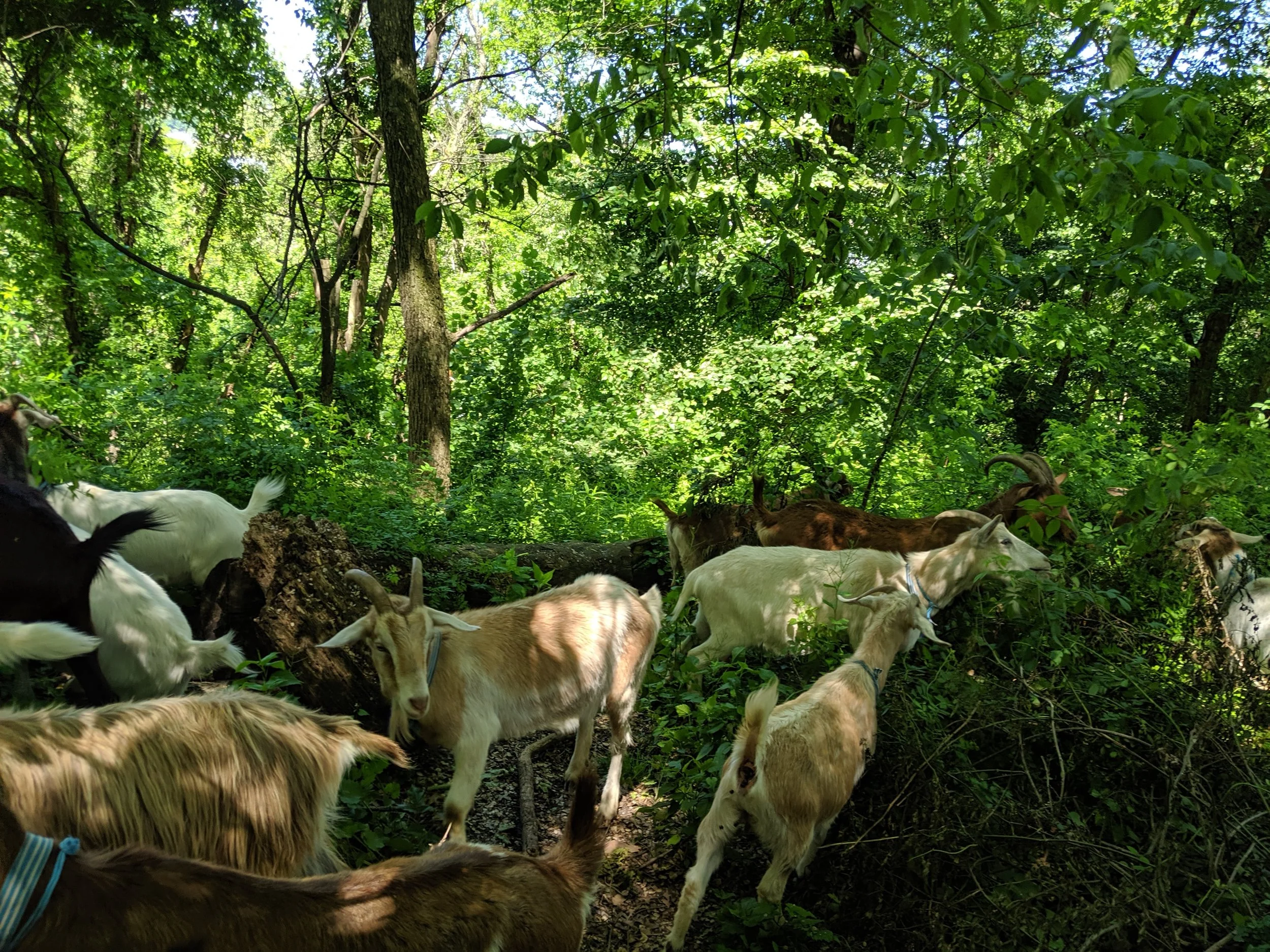
Repeated goat browse is an alternative way to control areas overgrown with invasive plant species, and can be particularly helpful when vegetation is too dense for typical removal efforts.
For more information on how to manage specific species, see our 2025 Best Management Practices Report.
Hudsonia’s report to the Lower Hudson PRISM focuses on non-chemical practices that protect biodiversity, and avoid the poorly understood effects of herbicides on environmental and human health.
Learn more about LHPRISM and their work
Species featured in report: